Tuesday, November 26, 2019


Groundsel Bush in Bloom

    The Extension office has received numerous inquiries on moderate size bushes blooming along roadsides and in natural areas. What people are observing is the groundsel bush (Baccharis halimifolia). It has thick branches, short trunks that are densely covered in branches. The plants are dioecious, meaning they have male and female flowers on different plants. The green to white flowers grow in small dense clusters are the terminal ends of the branches with slivery plume-like structures (botanically referred to as achenes) on the female flowers that resemble silvery feathers. The blooms produce significant amounts of nectar that attract butterflies and other pollinators. The shrub produces a lot of seeds that help it colonize open areas.
   The plant is frequently found growing by the seaside, being tolerant to salt sprays from the ocean. They thrive in most conditions but require full to partial sun. Groundsel bushes do well in wet areas and are often found in wetlands and swamps. The plant is native to our area. Interesting note: in Australia, the groundsel bush is invasive.
   The shrub is not considered a landscape plant, but you can plant and grow it in your yard if you would like. It is useful as a hedge or as a specimen plant.
(Above photograph by Karan Rawlins, University of Georgia)\

Friday, November 22, 2019


Japanese Maples


   Japanese maples add beauty and interest to the home landscape. They have smooth bark and weeping branches along with attractive foliage. The trees are quite versatile and can be grown in many settings such as a specimen or accent plant, a patio tree, in containers or in groupings.         
    There are hundreds of varieties of Japanese maples and they can range from being relatively inexpensive to over $1000 for some specimens. The shape of the trees varies from low growing and spreading to upright with a vase shape.  There are many colors of foliage
ranging from green to purple-red to orange. The many varieties can be classified as either dissected or non-dissected. The dissected types have leaves with deeply cut finely serrated lobes. Most of these types have a low growing, compact shape with a twisted branching pattern. Their reddish-purple leaves turn a bright orange color in the fall. The non-dissected varieties have leaves that have lobes that are not as heavily serrated and are more upright in their growth habits. The foliage generally has a green to bronze color during the summer turning to a red to purple color in the fall.
    Japanese maples are hardy trees that require minimal care once established. The soil should be kept evenly moist, high in organic matter and well drained.  Since the trees can suffer from excessive wind, they should be planted in protected locations. Full sun can cause the leaves to become scorched in which the leaves turn brown on the edges and between the veins. The condition results from the excessive loss of leaf moisture caused by the hot sun and dry conditions. The trees have shallow root systems that contribute to the problem. Apply supplemental water frequently, especially during prolonged hot dry spells. Part shade, especially in the afternoon, will help reduce the likelihood of this happening. The green leaf varieties can tolerate more sun than red or variegated leaf forms.


Wednesday, October 30, 2019

Growing fresh vegetables throughout the winter


    There is a chill in the air, and that means the garden season is quickly coming to an end. If you want to keep growing vegetables through the winter, you may want to look into a greenhouse.
A greenhouse may sound expensive, but the principles behind it can be anything from a sunny window to a cold frame to a full-fledged, heated greenhouse. All can be used to extend your growing season for vegetables.
   If you have ever lived in south Georgia or have friends there, you know many vegetables will grow in that area throughout the winters with no problems such as onions, collards, cabbage, broccoli, carrots, and peas. All of these can stand reasonably cold weather, including some frost.  But winter growing conditions in north Georgia are not the same.
   A sunny, south-facing window can be an ideal place to grow a few herbs or leafy greens. For an even better environment, you may want to install a greenhouse window that extends from the side of the house to maximizes the amount of sun the plants get while remaining warm at night and allowing for convenient access. Fresh leafy greens or herbs can be tasty treats during the winter. Herbs in which the leaves are harvested are best. Those in which you harvest the roots or flowers are harder to grow under these conditions.


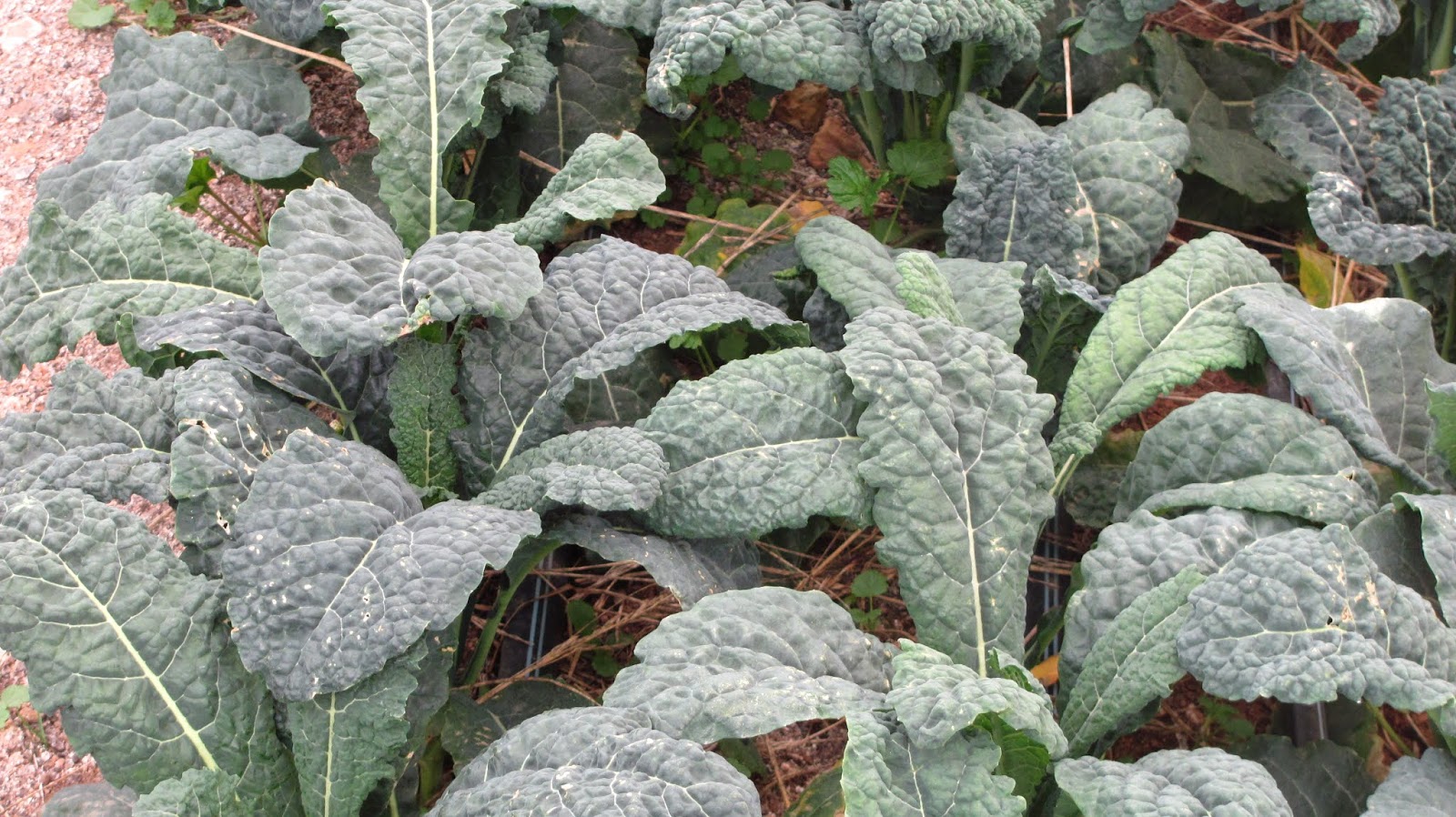
                                     Kale is one of many vegetables that can be grown in
                                     colder weather.


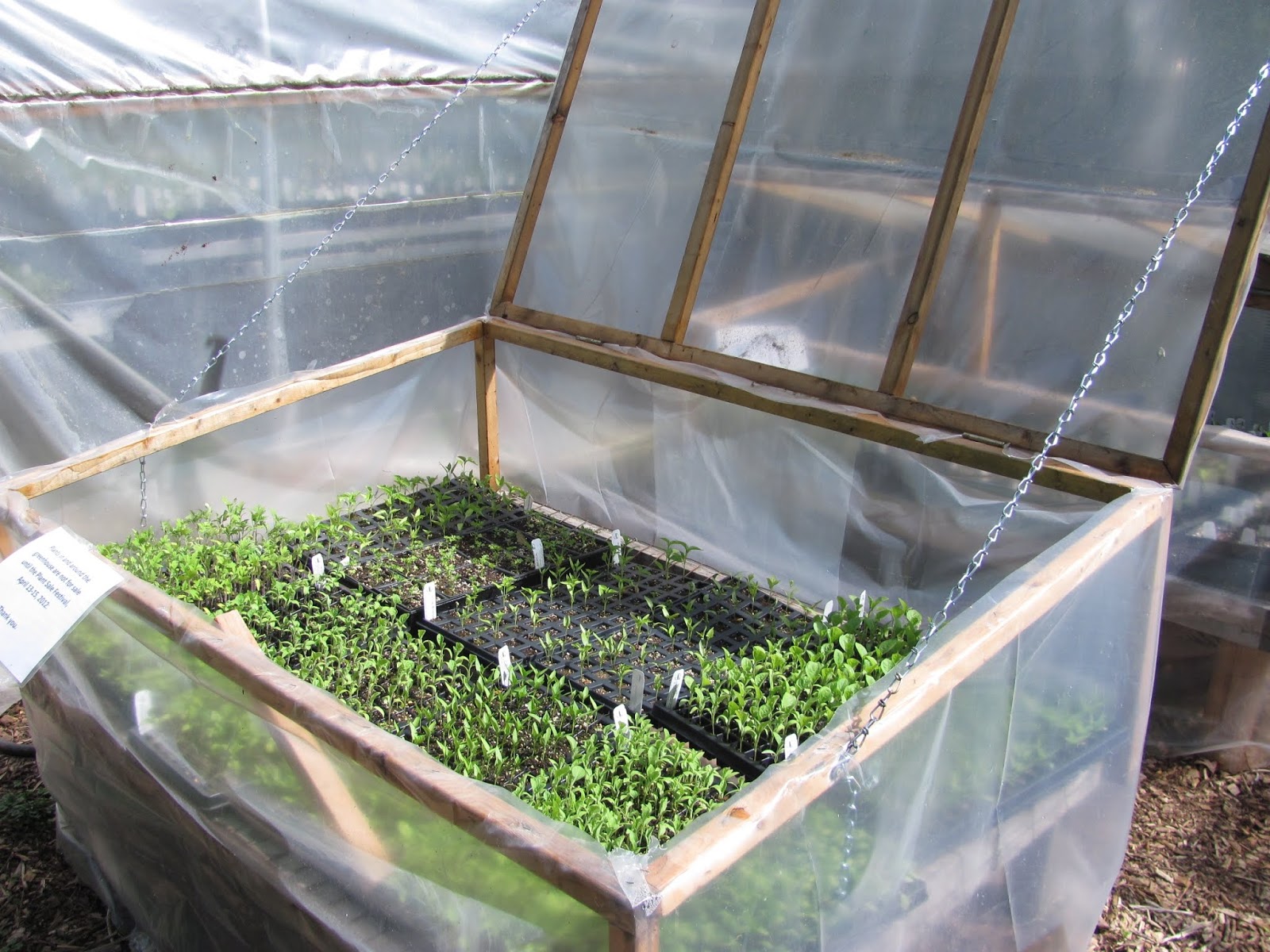
  A cold frame is another low-cost greenhouse environment you may want to consider, which is an enclosed, unheated space, usually no larger than one to two feet high. It’s usually covered with plastic or glass and relies on the sun to warm it during the day. At night, it may drop back to ambient nighttime temperatures. Large stones or a container of water can help keep night temperatures up by releasing heat accumulated during the day.
   During sunny days, these enclosures can get quite hot even in winter, so you may have to vent them during the brightest parts of the day. Venting can be done manually or with a passive, solar-powered venting device. These devices will open a vent when heated and are adjustable to your temperature requirements.
   For even greater temperature control, these cold frames can be heated. Electric heating mats will add bottom heat to your plants and seedlings and help prevent cold injury on the coldest nights.
   Finally, for the Cadillac approach, get a greenhouse. These can be inexpensive wood or PVC structures covered with plastic. Or they can be glass-enclosed, sophisticated environments that can even be an extension of your home. Many companies manufacture home greenhouses of various designs that can be free-standing or attached. Sunrooms that extend your living space are nothing more than greenhouses. These rooms not only give you space for growing plants but can extend the heated square feet of your home, adding considerable value to your investment.
   Greenhouses can be unheated or heated, but all should have some method of venting during warm, sunny days. Many vegetables can be grown in such a structure. If it’s unheated, cool-season vegetables such as lettuce, spinach, cabbage, and broccoli will do well, and the enclosure will protect them on the coldest nights while accelerating growth with the heat from the sun on warm, sunny days.
   With a fully heated and vented greenhouse, the sky’s the limit. Do you want fresh tomatoes or cucumbers in the winter? You can grow them in such a structure. Space is usually limited, so you may want to look for smaller plant types, like short-vine cantaloupes or patio tomatoes.
   Trellising is an excellent way to maximize the space, too. Commercial greenhouse vegetable production relies heavily on trellising to produce quality tomatoes, pepper, cucumbers, etc.
Nothing beats walking into a warm, moist greenhouse in the winter that can be an enjoyable hobby with endless hours of enjoyment, and vegetable production can be just a small part of the possibilities.


                                Cold frames are useful for growing vegetables during winter.                      
                                The structure helps protect the plants form the intense cold.


Day length influences flowering in some plants


    We are now in the fall months. Cooler temperatures are upon us with the cold winter days coming. In addition to the temperature changes, the days are getting shorter, which has an impact on many plants. Many of the deciduous trees and shrubs have foliage that is becoming colorful. The cooler temperatures are part of the reason for this phenomenon, but also it is a reaction to the shorter days. ‘Photoperiodism’ is the term used to describe a plant’s response to the length of day and night. Because the plants produce seeds, flowering is important plants to complete their life cycles. They can be divided into short day plants, long day plants and day-neutral plants.

   Short day plants are induced to flower when the lengths of the nights are greater than the days. You may have noticed that many wildflowers are in bloom now that were not earlier in the season. A better way to describe them is long night plants since the period of darkness is what stimulates the plants to flower. The less light promotes them to produce more flowers and fewer leaves and stems. Principal agriculture crops that are short-day plants include cotton, rice, and soybeans. Also, chrysanthemums, dahlias, goldenrods, asters, and poinsettias flower when the days shorten. For individual floral crops, flowering can be induced by imposing artificial darkness on them. In greenhouses, growers cover their plants with a dark curtain to block out light to increase the amount of darkness to induce flowering. Any disruption in the dark period will interfere with the production of flowers. A result of this process is the availability of chrysanthemums and other short day plants in stores throughout the year.

   Long day plants respond to shorter nights and longer days. They flower in the spring and early summer. Examples include peas, barley, lettuce, and wheat. Also, many of the vegetables that are planted in the fall begin to flower in the spring as a result of increased day length. Cabbage, collards, kale, mustards and other similar crops develop flowering stalks in the spring in a process referred to as bolting. The vegetables lose their flavor when this happens. Poppies, petunias, and larkspur are also long day plants.

     Day length does not influence the flowering of day neutral plants. Instead, they begin to flower after reaching developmental stage or age, or in response to environmental conditions such as a period of cold temperatures. Cucumbers, roses, tomatoes, beans, and potatoes are day neutral plants.

   Plants are complex organisms with a multitude of important physiological process. No two species are exactly alike. Many factors influence their growth and ability to produce flowers, fruits, and seeds. The amount of daylight and the length of nights are important to many plants, including important agriculture crops and ornamentals.

Poinsettias are am example of a short day plant